A gathering at St. James’s Park on 7 May brought together dementia researchers, NHS clinicians, carers, charities and community organisations to share progress and plans in the fight against inequalities in dementia care across the UK.
The second EquaDem Network+ annual conference drew delegates from Universities, NHS trusts, social care and third sector organisations and people affected by dementia to one of England’s most iconic football grounds. The day’s conversations ranged from national policy reform to the unexpected power of walking football in improving the lives of people living with dementia.
The Scale of the Problem
Dr Clarissa Giebel of the University of Liverpool, who leads the EquaDem Network+, outlined the many faces of dementia inequalities: from postcode lottery access to services, to the challenges faced by people from ethnic minority backgrounds, those living alone, those in rural areas, and those with rarer forms of the disease. A systematic review of international evidence she presented identified more than 40 studies pointing towards solutions, including one-stop memory clinics, better GP training, community link workers, and culturally adapted care services. This was supplemented by Equadem Network+ consultations with over 130 stakeholders in dementia, which highlighted different possible solutions on an individual, community, and system level. You can find out more about these solutions here.
From Professor Louise Robinson (Newcastle University), Equadem Network+ co-lead, we heard that dementia currently costs the UK an estimated £42 billion a year, half of which falls on unpaid carers. Despite the existence of NICE guidelines dating back to 2018, a persistent gap remains between what the evidence says works and what patients actually receive.
New research presented at the conference, drawing on data from nearly 1,500 GP practices in England, found that people living in the poorest 20% of UK areas are 18% less likely to receive existing dementia medications compared to those in the wealthiest areas. People with a learning disability and dementia fare even worse, they are 54% less likely to receive these treatments at all.
The Economic Case for Change
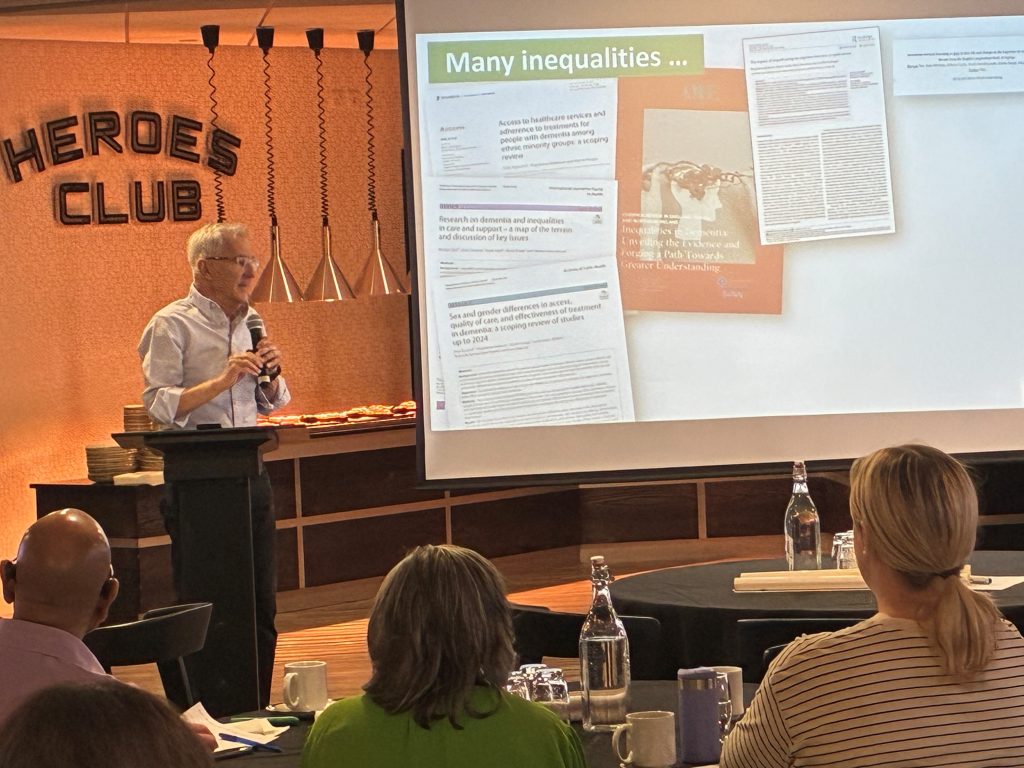
Professor Martin Knapp of the London School of Economics
made a compelling economic argument for tackling inequalities head-on.
His team’s analysis found that scaling up dementia navigator services, in which specialist workers are embedded within multidisciplinary care teams, to cover the full eligible English population would cost around £710 million per year but generate annual savings to the NHS and social care of £960 million. Carer support programmes, too, have been shown to be cost-effective and cost-reducing when offered at scale.
Professor Knapp was clear, however, that many of these interventions carry their own inequalities – tobacco taxes fall harder on lower-income households, and low emission zones can disadvantage those who own older vehicles and live in areas with poor public transport. The solution, he argued, is “proportionate universalism”: universal services, but with greater intensity and resources directed towards the most disadvantaged.
A National Policy Moment
Alzheimer’s Society England described the current moment as a “once in a generation opportunity.” The NHS’s forthcoming Modern Service Framework, part of the 10 Year Plan, is being shaped right now and the Alzheimer’s Society has been pushing for two headline goals: a measurable reduction in dementia mortality for over-65s, and a compression of the period of severe ill-health so that people live longer with better quality of life, regardless of who they are or where they live.
Young Onset Dementia: A Hidden Inequality
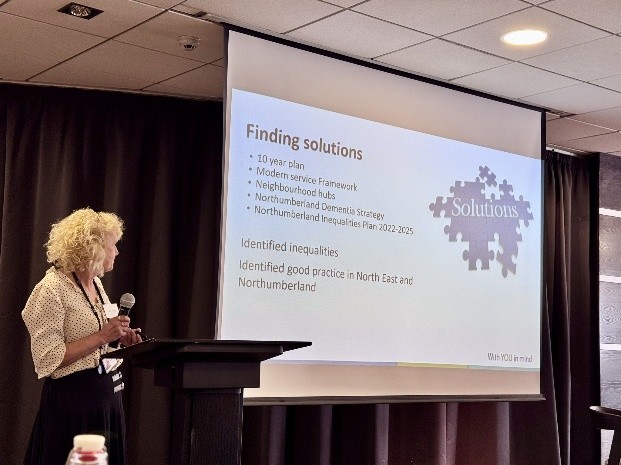
One of the afternoon’s presentations came from Julie Young, a clinician from Cumbria, Northumberland, Tyne and Wear NHS Trust, who spoke about her EquaDem-funded internship researching Young Onset Dementia (YOD) i.e. dementia that develops in people under 65.
Julie described a system that was not built for younger patients: services designed for older people, diagnostic delays averaging 4.4 years, and a lack of any specialist service in Northumberland. Research suggests that fewer than 42% of newly diagnosed younger people received any follow-up in the first six weeks after diagnosis, and 69% of carers reported no provision for respite.
Her interviews with health, social and third sector professionals pointed to a need for a collaborative, joined-up approach: a clear diagnostic pathway, a specialist team for younger people with dementia, a named keyworker for long-term support, age-appropriate community services, and proper peer support. She is now working with local partners to develop practical solutions tailored to Northumberland’s rural context.
To find out more about how to apply for an Equadem research internship for care professionals and third sector providers, click here.
Football as Medicine
Among the conference’s more surprising and heartening sessions were two presentations from Newcastle United.
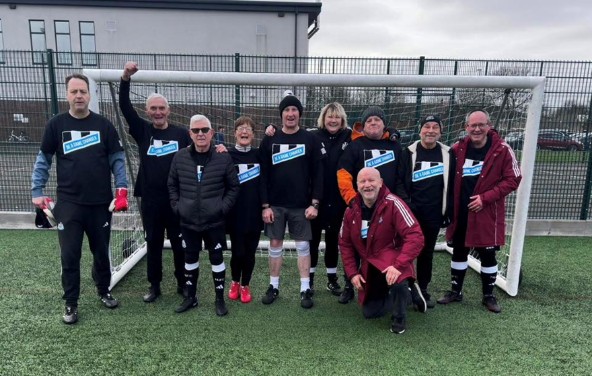
Thomas Graham from the Newcastle United Foundation described the club’s Dementia Friendly Walking Football programme, launched in February 2024 with just two participants. It has since engaged 33 individuals and their support networks, building confidence and social connection.
Be a game changer!
In February 2026, a team made up of participants living with dementia entered the Foundation’s Walking Football League, a competition featuring 24 teams and nearly 300 players. They named themselves “Be A Game Changer.”
Dean Buckle then described the Newcastle United Memory Café, which began in 2019 with around 30 attendees and has grown to welcome 150 people every month, now the largest football drop-in session of its kind in the North East, with over 5,000 total attendees since its founding. Sessions are free, and each month features a guest from the club’s past, typically players, staff and journalists from the 1960s through to the 1990s, decades chosen deliberately because recent memories are often the first to fade in dementia. Participants are taken back in time, and it works.
One piece of feedback quoted by Buckle captured the impact simply: a carer told the club that her husband was getting to the point where he struggled to remember much at all, “but he never forgets that the last Thursday of the month is Memory Café.”
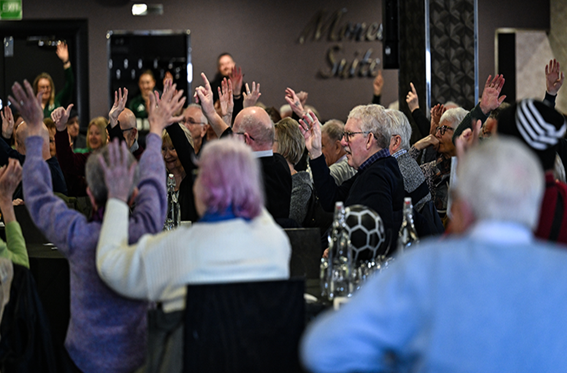
One piece of feedback quoted by Buckle captured the impact simply: a carer told the club that her husband was getting to the point where he struggled to remember much at all,
“but he never forgets that the last Thursday of
the month is Memory Café.”
Reaching the Hardest to Reach
The afternoon also heard from Elisabeth Wilson of Chrysalis Dementia Support, a charity operating in West Northumberland, one of England’s most rural areas, where dementia prevalence is above the national average and growing. Hexham constituency alone has an estimated 1,782 people living with dementia, placing it in the top 10% of UK constituencies by prevalence.
Elisabeth highlighted the challenges of reaching under-represented groups in rural areas, including farming communities and ethnic minorities, and the ongoing absence of statutory funding for what is often described as a social rather than medical need.
What Comes Next
The conference closed with a look to the future. Delegates heard about the broader landscape of dementia research networks now operating across the UK.
The conversations at St. James’s Park were a reminder that tackling dementia inequalities is not a single problem with a single solution. It involves postcode gaps, cultural barriers, age discrimination, fragmented services and chronic underfunding. But it also involves walking football teams, memory cafés, dedicated clinicians working in rural communities, and economists building the case for change.
Progress is being made. There is a long way still to go.
EquaDem is an ESRC and NIHR-funded research network focused on addressing inequalities in dementia diagnosis and care across the UK. For more information, visit the EquaDem website or email equademnetworkplus@liverpool.ac.uk.